
Children in Reception and beyond continue to acquire new skills and knowledge, but there is no major developmental shift across this phase of early childhood.
Children are still learning how to manage their emotions, sustain attention, negotiate relationships and make sense of the world. While there is continuity in development, children may experience significant changes in expectations and environments which require careful support.
Close, warm relationships with others continue to form the basis for much learning. Children are now building a stronger sense of their own identity and their place in a community and the wider world, learning to recognise the importance of social rules and customs, and to show understanding and tolerance of others. Social skills in cooperating with others may grow rapidly through an increased interest in joint play such as role play and construction, while there remains a challenge in balancing independence and complying with the wishes of others. Children still need the comfort and security of special people.

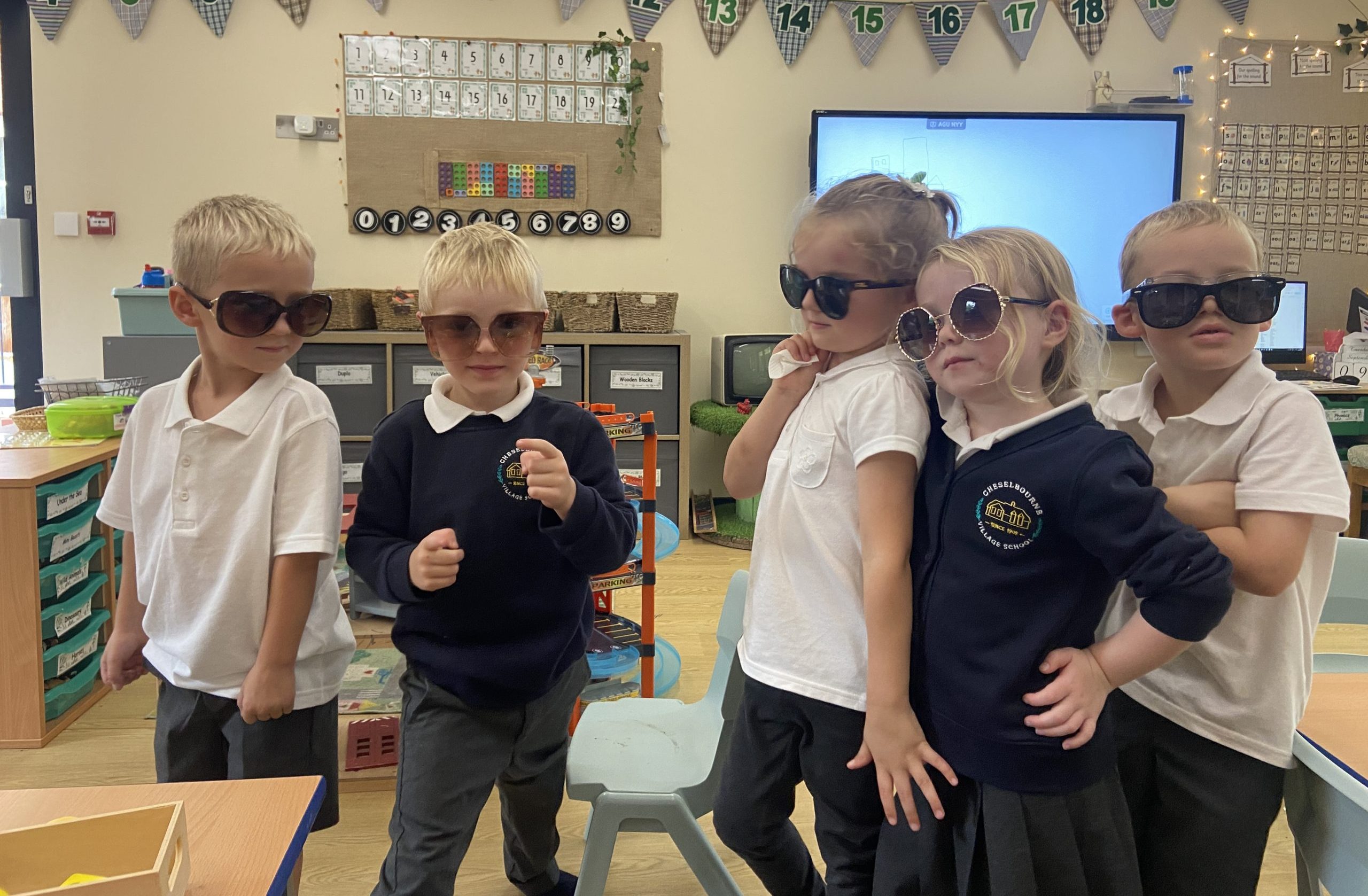
Children are now able to plan and undertake more challenging activities with a wider range of materials for making and doing. Their language becomes more complex as they express their ideas with increasing sophistication, and literacy and mathematics may develop at a rapid pace.
It is important to remember that each Unique Child follows their own developmental pathway. This pathway is not determined by their date of birth, but it is important to be mindful that some children are almost a year younger than others in their class. Consequently, expectations and pedagogy should follow the development of the children, with no marked jump based on movement into a new year group or predetermined expectations of where children ‘should’ be in their learning.
Children are now able to plan and undertake more challenging activities with a wider range of materials for making and doing. Their language becomes more complex as they express their ideas with increasing sophistication, and literacy and mathematics may develop at a rapid pace.
It is important to remember that each Unique Child follows their own developmental pathway. This pathway is not determined by their date of birth, but it is important to be mindful that some children are almost a year younger than others in their class. Consequently, expectations and pedagogy should follow the development of the children, with no marked jump based on movement into a new year group or predetermined expectations of where children ‘should’ be in their learning.

The Reception Year is an essential and integral part of the EYFS.
The overarching principles that underpin practice remain statutory throughout the Reception year. This requires giving priority to the quality of relationships and interactions, rich opportunities and resources for play, and support for the development of the Characteristics of Effective Learning as well as the Prime and Specific areas of learning. Despite this, many schools feel under pressure when children enter the Reception year to move away from what evidence tells us is best practice for young children.
School leaders have a crucial role to play in safeguarding the wellbeing and development of children in the Reception year by ensuring that practice in Reception classes continues to reflect principles of the EYFS and that all staff working in Reception understand the importance of play-based pedagogy.
As children move across Reception and beyond, professional dialogue across phases is essential to ensure children have the best possible support for their learning and development. Such dialogue is supported by sharing best practice and individual learning journeys through the EYFS Profile, which remains a statutory requirement on transition to KS1 in England.
What children learn in KS1 may be different, but how they learn must be similar and familiar.
As children move into Key Stage 1, curriculum content becomes more formally defined. New subject-specific vocabulary, concepts and knowledge are introduced and focus shifts from the Prime Areas of Learning and Development to the core subjects of the National Curriculum. While new expectations and experiences are part of this change, developmentally there is very little difference in the ways in which children learn in KS1 and so the pedagogy should not alter.
Pedagogic continuity between Reception and Year 1 and a developmentally- informed approach to the National Curriculum support children’s emotional security, confidence and sustained engagement. Young children need long periods of uninterrupted time to make sense of new learning. To facilitate this, the learning environment in KS1 should ideally include indoor and outdoor provision between which children can flow as freely as possible. Both areas should include resources which children can use independently throughout the day. This ‘continuous provision’ supports the independent play and enquiry with which children are familiar, while also allowing the National Curriculum to be introduced in more playful, active ways.
In Reception and KS1, children continue to be motivated by meaningful learning opportunities, over which they have an element of agency. Research shows that giving children a sense of agency over their learning alongside opportunities for cognitive challenge is essential in promoting metacognition. Although what children are learning becomes more prescribed, with focus on literacy and maths increasing in Reception and again as they begin to follow the National Curriculum in Year 1, removing opportunities for choice too early can lead to reduced engagement, compliant behaviour and a narrowing of children’s identities as capable, confident learners. In contrast, being able to make choices that influence the direction of their learning encourages a sense of empowerment which results in greater curiosity and resilience in the face of new challenges.
A balance between adult- and child-led learning is essential in Reception and KS1. Skilled teachers recognise that the role of the teacher changes as they move between leading the learning (the adult-led agenda) and following the learning (the child-led agenda). When teachers are leading learning, the purpose of the activity and its desired outcomes have been determined by them. When teachers are following learning, their role is more varied and unpredictable. When following the child’s lead, the teacher may step back and observe, or join in and interact.
Knowing when to step back and when to join in takes a great deal of skill. In order to achieve the best outcomes for every child, school leaders must ensure that Reception and KS1 teachers understand developmentally-informed practice. This also means that senior leaders must be confident in monitoring and assessing play-based pedagogy.

Play is a vital way in which children in Reception and KS1 continue to learn skills, strategies and attitudes that adult-led learning alone cannot teach.

At a developmentally appropriate point, adult-led experiences teaching specific knowledge and skills do have a role in children’s learning. These experiences alone, however, do not provide the scope of learning that occurs through high quality play. When children rely too heavily on adult-led and directed experiences then they can become passive and unable to lead their own learning.
Opportunities to learn through play empower children to develop resilience, flexibility, critical thinking and initiative. These are the skills they need not only in their early years, but in order to manage the uncertain, unpredictable world of the future.
England is currently an outlier in the UK as the only nation with no statutory expectation that play should continue beyond the Early Years. Scotland and Wales are leading the way with frameworks that embed and protect play throughout the primary years. Where school leaders have a strong grounding in early childhood pedagogy and the confidence to pursue evidence-informed practice, play is more likely to be protected and extended beyond Reception and schools are more likely to see happy, healthy children who love learning and are thriving in Reception and beyond.