

High quality interactions that are initiated by the child and supported by the adult: Share attention, Respond, Expand, Conversation; from Education Endowment Foundation

Key information on ‘serve and return’ and its importance, with links to more resources
“Serve and return” interaction
Video from Harvard Center on the Developing Child describing how serve and return is crucial for building brain connections


Listen to my idea! Communication and language in the early years
Book chapter describing CL development, role of adults, language for thinking, and examples from practice

Finding and Exploring Young Children’s Fascinations
“All children will have strengths that can be built on and effective provision for gifted and talented children will be good practice for all”
Learning, Playing and Interacting: good practice in the Early Years Foundation Stage: Good practice in the EYFS
Guidance on a continuum of play and teaching, with emphasis on how children learn and the adult role, illustrated through case studies
Scaffolding self-regulated learning
Suggested comments/questions adults can use to support children’s thinking as they plan, monitor and evaluate their activities
How metacognitive talk can support learning in in the early years
Blog on how metacognitive talk can help young children to think differently about their learning and provide an opportunity for structured reflection and future planning
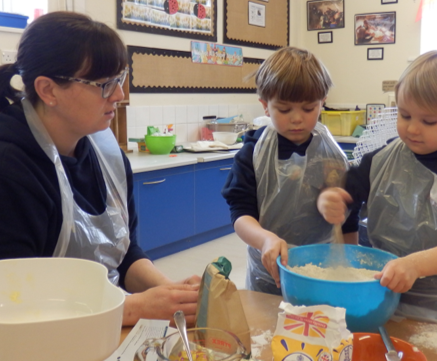
Deciding what is and isn’t fair
A childminder supports children’s thinking, using discussion to decide who should get to have a piece of cake
Early Years High-Quality Interactions: What, Why, How
Thorough and informative guide from Fife, with principles, information, and practical ideas
Huge bank of videos, informative text and webinars from Headstart in the US, exploring high quality interactions across contexts
EYFS Best Practice – All about…interactions
Article by Julie Fisher explaining how adult-child interaction can enhance learning and development while supporting the child to meet their own agenda –without unnecessary interfering