Birth to 5 Matters Observation, assessment and planning Resources
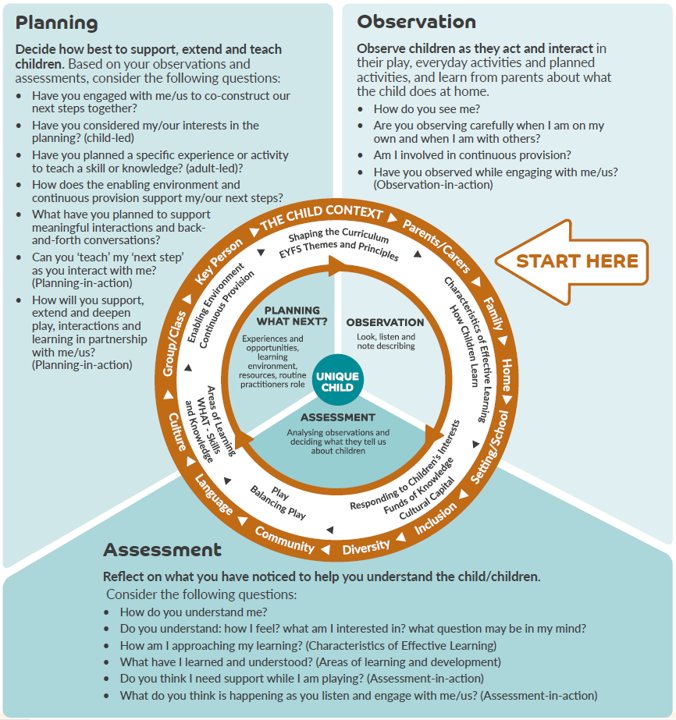
Explaining the Observation, Assessment and Planning Wheel
Detailed discussion by Di Chilvers of how all the elements in understanding children in the context of family and community, how and what they are learning, come together to build curriculum and support each child’s learning and development

Case study explaining why observation, assessment and planning is a professional skill for all educators, at the heart of practice with children across the EYFS
Case study explaining how the Ranges and overlapping ovals help educators to view children’s development and learning as a continuum of progress which is unique to each child in the EYFS
With a baby, it’s the little things we see through our observations and relationships
Case study exemplifying what ideas of “Positive Relationships – what adults might do” could look like with a baby in the care of a childminder

Observation in action — 5 interactions in 1 minute with toddlers
Case study demonstrating how each interaction can make a difference to a child in that moment; the cycle of observation-in-action / assessment-in-action / planning-in-action
Observing Kai – Following a child’s interest over 3 years
Case study showing how for some children an interest will persist over many years, which can be a powerful ‘driver’ for the child’s development
Observing a child with additional needs — from pre-verbal to verbal, from dysregulated to regulated
Case study explaining how a preschool met the needs of a pre-verbal child with an ASD diagnosis and supported the development of his communication and language skills
Case studies on the Characteristics of Effective Learning
Examples across the EYFS age range which exemplify how children learn through the Characteristics of Effective Learning and the adult role
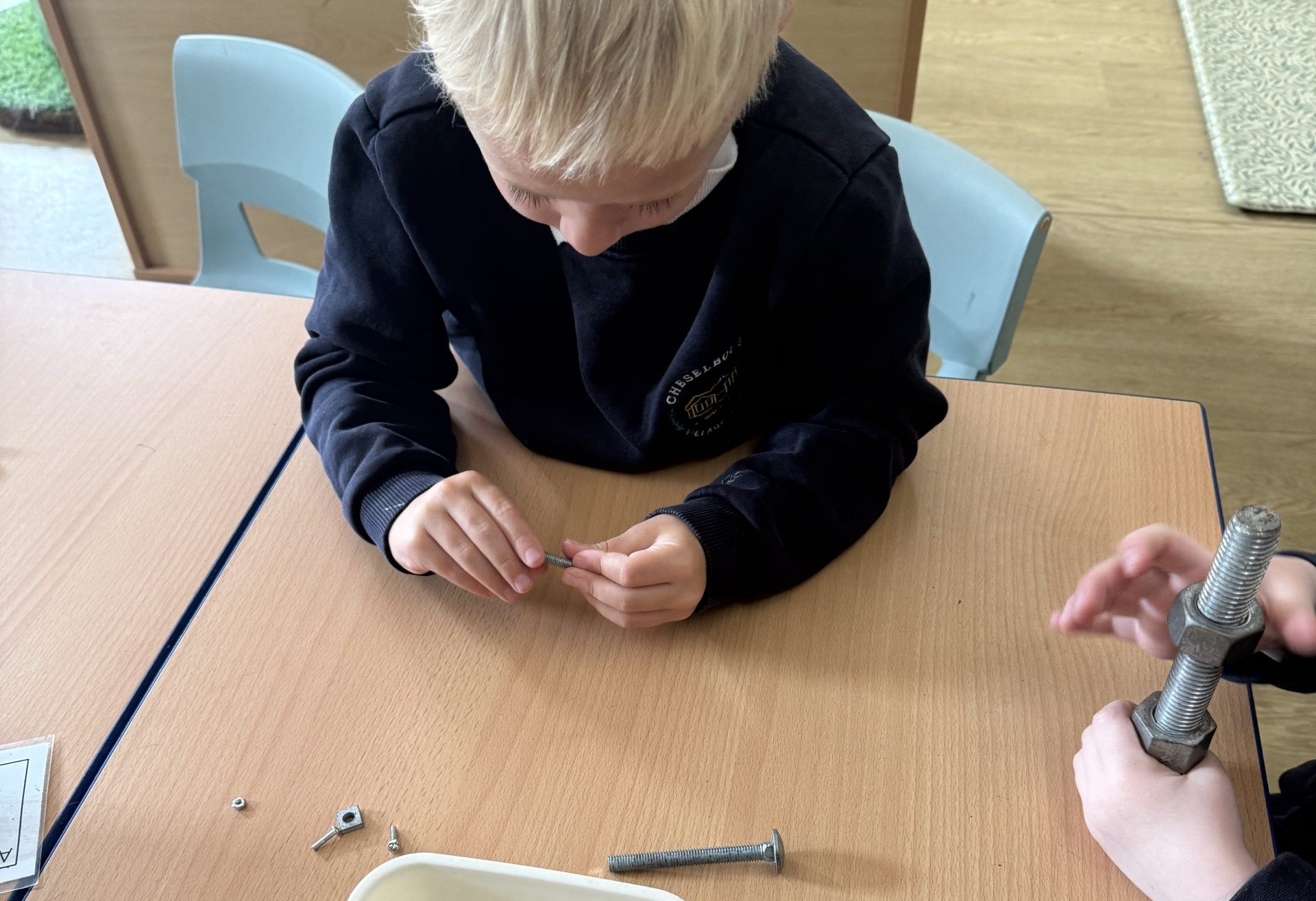
Case study showing how educators support meaningful learning by observing children and responding in the moment – highlighting OAP as an integral part of teaching young children
OAP as Quality improvement – an explanation
Educators, leaders and managers use formative and summative assessment processes to reflect on what their evaluations and findings tell them about the quality of the experiences, education and care the children receive
Professional Reflective Practice
Defines reflective practice, with a short case study showing how this supports professional practice when working with young children
Using the observe-plan-cycle to co-construct the curriculum with children
Discusses the cycle/process of OAP as central to creating and informing the curriculum by tuning into children’s play, interactions and interests; with brief case study
Observing, recognising and responding to children’s funds of knowledge and interests
Paper by Liz Chesworth, digging deeper into funds of knowledge-based interests and how educators can recognise and support funds of knowledge
Involving other professionals – SEND
Working in partnership with other professionals, community and support groups connects everyone who is involved with the child and family to build a clearer picture of needs and benefit the child
Observing Children’s Development Part One
Early Education Journal focusing on the fundamental principles of why observation is an essential, skilled and professional strand of practice in the early years

Observing Children’s Development Part Two
Early Education Journal further explores observation, making connections to schema, Characteristics of Effective Learning, English as a second language, imaginative play and pedagogical documentation
Including children’s voices in the early years
Blog by Jayne Carter and Tamsin Grimmer considering what we mean by listening to children; explores practical ways in which we can actively listen to young children and gather their views including observation as a form of listening

Role of the adult / Rôl yr oedolyn Scaffolding and supporting children’s play
Perspectives from Welsh practice, highlighting the importance of adult and child-initiated activities. Helpful information and strategies about how observation can inform planning and development
The Layers of Play – Helping Play to Work
An observation tool which supports educators to sensitively ‘observe, support and extend’ play developed by Guildford Nursery School & Professor Tina Bruce
Bristol Early Years Assessment Guidance: Supporting principles, practice and processes
Drawing on the EYFS Statutory Framework and Birth to 5 Matters, establishing a shared understanding of the principles of assessment
Reflection with Guidance: A Froebelian tool for developing practice and transformations
Supporting educators to learn constantly through reflecting and discussing what they have observed; a tool for practice focussing on child development, play & self-evaluation
Observing young children – A Froebelian approach
A comprehensive explanation by Stella Louis of the principles and practice of observation and how it supports educators’ own understanding of child development & learning
Reflecting on the Reflective Cycle
Refocus Journal : Developing a thinking structure to support a creative and reflective approach to teaching and learning, showing that OAP is a reflective cycle in itself
Realising the Ambition: Being Me
National Scotland and Scottish government (2020) Scotland’s practice guidance covering a wealth of aspects of early years pedagogy and practice, including OAP, play pedagogy and the early childhood curriculum
A curriculum for funded non-maintained nursery settings
Welsh guidance to develop a child-centred curriculum including play and play-based learning
Assessment arrangements for funded non-maintained nursery settings
Education Wales Guidance which supports the Welsh curriculum including the role of observation, professional dialogues, assessment and the principles of progression
Creating a curriculum with young children
A Froebel research project which develops inclusive and responsive approaches to curriculum planning, pedagogy and provision
Following the 4 key principles of the EYFS to illustrate effective assessment practice, DfES (2007)
Progress Matters: Reviewing and enhancing young children’s development
National Strategies guidance for leaders and managers on reviewing children’s learning, development and progress
Two examples of Learning Stories adapted from Learning, Playing and Interacting, a National Strategies resource
A Know How Guide: The EYFS progress check at age two
NCB 2012 guidance supporting educators in early years settings in undertaking the EYFS progress check at age two
A curriculum for funded non-maintained nursery settings
Welsh guidance to develop a child-centred curriculum including play and play-based learning